
Baltimore City Circuit Court Records serve as the official legal archive for one of Maryland’s busiest judicial districts. These records document civil lawsuits, criminal trials, family law cases, probate matters, and land transactions dating back centuries. Located in the historic Cummings Courthouse at 111 North Calvert Street, the court processes over 120,000 filings annually. The public can access docket sheets, judgments, deeds, and emergency orders through online portals, in-person visits, or certified mail requests. Clerk Marilyn Bentley oversees record management from Room 412, ensuring compliance with state transparency laws. Whether you’re a lawyer, researcher, or private citizen, knowing how to locate, interpret, and use these records is essential for legal research, background checks, or historical study.

How to Search Baltimore City Circuit Court Records Online
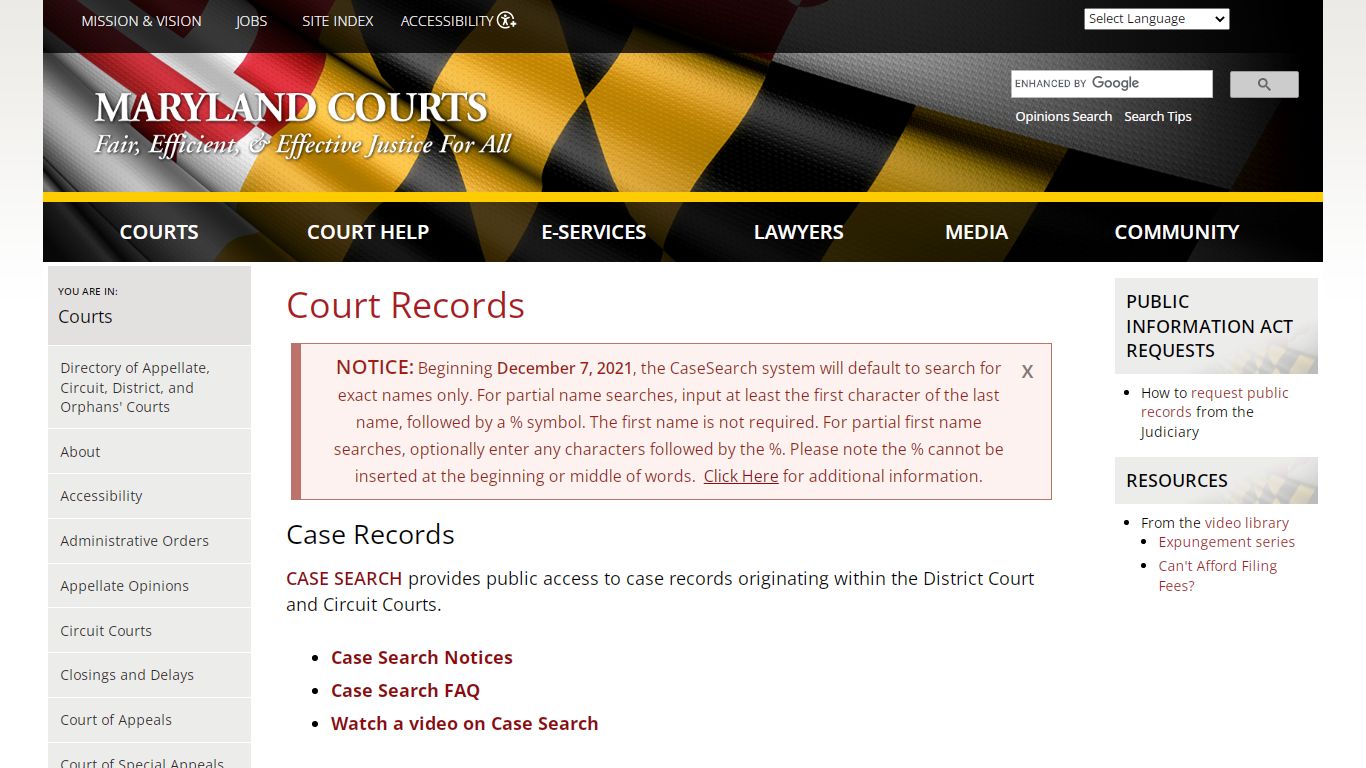
The primary gateway for accessing Baltimore City Circuit Court Records is the Maryland Courts CaseSearch system. This free public portal allows users to look up active and closed cases by party name, case number, or attorney. As of December 2021, the system requires an exact surname match by default. To perform a partial name search, enter the first letter of the last name followed by a percent sign (%). For example, “S%” returns all surnames starting with S. Users can narrow results using date ranges, case types (civil, criminal, family), or docket numbers. The database updates nightly, ensuring recent filings appear within 24 hours. Results display case status, hearing dates, presiding judges, and final dispositions. For bulk or historical searches, consider visiting the courthouse in person or contacting the Clerk’s Office directly.
Land Records and Property Documents in Baltimore City
Land Records in Baltimore City are maintained by the Land Records & Licenses Division in Room 610 of the Clarence M. Mitchell Jr. Courthouse at 100 North Calvert Street. This department holds more than 250,000 property documents, including deeds, mortgages, liens, and plat maps, some dating to the 18th century. Researchers can view original records on-site using public terminals or request certified copies for legal use. Digital scans are available through the state’s online repository, with fees starting at $2.00 per page. Marriage licenses and business permits are issued in Room 627. The division operates Monday through Friday from 8:30 a.m. to 4:30 p.m. For phone inquiries, call (410) 333-3760 for land records or (410) 333-3790 for licenses. Fax requests go to (410) 333-3767. Certified recorders verify every document before release to ensure accuracy and legal validity.
Understanding Case Types in Baltimore City Circuit Court
Baltimore City Circuit Court handles three major categories of cases: civil, criminal, and family law. Civil cases include contract disputes, personal injury claims, and small claims up to $50,000. Criminal cases range from misdemeanors to felony trials, including assault, theft, and drug offenses. Family law matters cover divorce, child custody, adoption, and domestic violence protective orders. Each case type follows specific procedural rules and filing requirements. For example, civil lawsuits must be filed with a complaint and summons, while criminal charges begin with an arrest or indictment. Family cases often require mediation before trial. All case files are public unless sealed by court order. Users can identify case types in CaseSearch using filters or by reviewing docket entries. Knowing the case category helps determine which records are available and how to interpret them.
Clerk of Court Services and Public Assistance
Marilyn Bentley, Clerk of Court for Baltimore City, leads a team of eight professionals who manage record access, docketing, and document certification. Her office, located in Room 412 of the Cummings Courthouse, handles approximately 300 inquiries daily. Services include issuing certified copies of judgments, processing filing fees, and guiding users through record retrieval. The Clerk’s Office also coordinates with the Maryland Court of Appeals for case transfers and appeals. Public assistance is available in person during business hours or by calling (410) 333-3733. Staff provide information on filing procedures, fee schedules, and required forms. For land records or licensing questions, visitors are directed to the Clarence M. Mitchell Jr. Courthouse. The Clerk’s Office does not offer legal advice but can explain administrative processes clearly and accurately.
Court Reporting and Transcript Requests
Official court transcripts for Baltimore City Circuit Court proceedings are produced by certified realtime reporters under Patricia Trikeriotis, Chief Court Reporter. Her team, based in Room 515 of Courthouse East, provides verbatim records of trials, hearings, and conferences. Transcripts are delivered in PDF and XML formats within 24 hours of the event. Requests can be made by phone at (410) 396-5010, fax at (410) 545-7764, or email. Electronic audio submissions are accepted through a secure portal to speed up processing. Fees vary by page count and urgency. Expedited service costs extra. Transcripts are essential for appeals, legal research, or personal records. Users must provide the case name, date, and courtroom number when ordering. All transcripts are certified and admissible in legal proceedings.
Highlighted Cases and Emergency Orders
The Highlighted Cases portal on the Baltimore City Circuit Court website features landmark rulings, administrative orders, and emergency directives. Recent examples include the 2020 COVID-19 order that paused jury trials and extended filing deadlines. Another key document is the statutory tolling amendment that protected civil litigants during the pandemic. The database updates weekly with new PDFs, searchable by keyword, judge, or date. Each entry includes the case number, filing date, and presiding judge. Researchers use this tool to track precedent-setting decisions or understand court operations during crises. The portal is especially useful for journalists, attorneys, and policy analysts monitoring judicial trends in Baltimore City.
Historical Court Records at the Baltimore City Archives
For records predating modern digital systems, the Maryland State Archives houses the official repository of Baltimore City Circuit Court Records. This includes documents from colonial times, such as 17th-century probate inventories, land grants, and criminal indictments. The “Court Records Before 1776” collection is fully cataloged and available for on-site review. Digitized copies can be requested via inter-library loan. Access follows fair-use guidelines, and a small copying fee applies. Researchers studying genealogy, urban development, or legal history rely on these archives for primary source material. The archives are located at 350 Rowe Boulevard, Annapolis, MD, and operate Tuesday through Saturday. Appointments are recommended for extensive research projects.
Filing Fees and Payment Methods
Filing fees for Baltimore City Circuit Court vary by case type. Civil complaints cost $100 to $200, while criminal filings are typically $50. Small claims under $5,000 require a $75 fee. Marriage licenses are $85, and business permits range from $30 to $150. Payments can be made in cash, check, money order, or credit card at the Clerk’s Office. Online payments are accepted for certain services through the state portal. Fee waivers are available for low-income individuals with court approval. All fees are non-refundable once processed. Users should verify current rates before submitting documents, as prices may change annually. Receipts are issued for all transactions and should be kept for personal records.
Public Access Hours and Location Details
The Baltimore City Circuit Court is open Monday through Friday from 8:30 a.m. to 4:30 p.m., excluding federal holidays. The main courthouse is at 111 North Calvert Street, Baltimore, MD 21202. The Land Records Division is in the adjacent Clarence M. Mitchell Jr. Courthouse at 100 North Calvert Street. Both buildings offer wheelchair access, public restrooms, and free Wi-Fi. Parking is available in nearby garages, with discounted rates for court visitors. Public transit options include the Baltimore Light Rail and Metro Subway, with stops within two blocks. Security screening is required upon entry. Visitors should bring valid photo ID for record requests. For directions, use the official court website or call (410) 333-3722.
Common Uses of Circuit Court Records
People access Baltimore City Circuit Court Records for many reasons. Lawyers use them to build cases, verify facts, or check opposing parties’ histories. Journalists investigate public figures or track crime trends. Researchers study legal patterns or family genealogy. Homebuyers review property titles to ensure clear ownership. Employers conduct background checks on job candidates. Landlords screen potential tenants. Individuals check their own legal history or resolve disputes. Nonprofits monitor housing evictions or domestic violence cases. Each use requires understanding what information is public and how to interpret legal documents correctly. Misuse of records can lead to privacy violations or legal liability, so users should always follow ethical guidelines.
Restricted and Sealed Records
Not all Baltimore City Circuit Court Records are publicly accessible. Some cases are sealed by court order to protect privacy, such as juvenile delinquency files, adoption records, or sensitive family matters. Grand jury proceedings are confidential by law. Certain criminal records may be expunged after completion of sentence or probation. Sealed records do not appear in CaseSearch or public terminals. To request access to restricted files, individuals must file a motion with the court and obtain judicial approval. Reasons for sealing include witness protection, ongoing investigations, or mental health concerns. Violating seal orders can result in contempt charges. Always verify the status of a record before assuming it is public.
How to Request Certified Copies
Certified copies of Baltimore City Circuit Court Records carry legal weight and are required for official purposes like immigration, employment, or property transactions. Requests can be made in person at the Clerk’s Office, by mail, or online for certain documents. In-person requests are processed the same day if records are on file. Mail requests should include a self-addressed stamped envelope, payment, and a completed request form. Online orders through the state portal take 3–5 business days. Certification fees are $5 per document plus copying costs. Each certified copy includes a raised seal and signature from the Clerk of Court. Uncertified printouts from CaseSearch are not legally valid. Allow extra time for older or archived records.
Understanding Docket Entries and Case Status
A docket sheet lists every action taken in a Baltimore City Circuit Court case, from initial filing to final judgment. Entries include dates, descriptions (e.g., “answer filed,” “motion denied”), and document numbers. Users can track a case’s progress by reviewing the docket in CaseSearch or at public terminals. Common statuses are “active,” “closed,” “appealed,” or “settled.” Closed cases may still have enforceable judgments. Active cases have upcoming hearings or pending motions. Knowing how to read docket entries helps users understand timelines, key events, and next steps. For complex cases, consider consulting an attorney to interpret legal terminology or procedural nuances.
Jury Service and Court Participation
Residents of Baltimore City may be summoned for jury duty in the Circuit Court. The Jury Commissioner’s Office manages selections and provides information at (410) 887-3596. Jurors must appear at the Cummings Courthouse on the assigned date. Exemptions are rare and require court approval. Failure to appear can result in fines or arrest. Jurors receive a daily stipend and mileage reimbursement. The process typically lasts one day unless selected for a trial. Citizens can check their status or request deferrals online. Serving on a jury is a civic duty that supports fair trials and public trust in the justice system.
Contact Information and Official Resources
For questions about Baltimore City Circuit Court Records, contact the Clerk’s Office at (410) 333-3733 or visit Room 412, 111 North Calvert Street, Baltimore, MD 21202. Land Records inquiries go to (410) 333-3760. Court Reporting requests are handled at (410) 396-5010. The official website is https://www.baltimorecitycourt.org/. TTY users can reach the court via Maryland Relay at 711. Visiting hours are Monday through Friday, 8:30 a.m. to 4:30 p.m. For maps and directions, use the embedded Google Map below:
Frequently Asked Questions
Many people have similar questions about accessing and using Baltimore City Circuit Court Records. Below are detailed answers to the most common inquiries, covering search methods, fees, restrictions, and practical tips for first-time users.
How do I find a specific case in Baltimore City Circuit Court Records?
Start by visiting the Maryland Courts CaseSearch portal. Enter the exact last name of a party involved in the case. If you’re unsure of the full name, use a partial search by typing the first letter followed by a percent sign (%). For example, “J%” will show all cases where the last name starts with J. You can narrow results by selecting a date range, case type (civil, criminal, or family), or entering a docket number if known. The system updates every night, so recent filings appear quickly. If you can’t find the case online, visit the Clerk’s Office in person at 111 North Calvert Street. Bring as much information as possible, such as names, dates, or case numbers. Staff can help locate records not yet digitized or provide guidance on search strategies. Always double-check spelling, as errors prevent matches.
Are Baltimore City Circuit Court Records free to access?
Yes, basic access to Baltimore City Circuit Court Records is free through the online CaseSearch system. You can view docket sheets, case statuses, and hearing schedules without charge. However, obtaining certified copies, printed documents, or historical archives involves fees. Copying costs $2.00 per page, and certification adds $5.00 per document. Land records and marriage licenses have separate fees, typically under $10. Fee waivers are available for low-income individuals with court approval. Online viewing remains free regardless of income. For bulk research, consider using public terminals at the courthouse or the Maryland State Archives. Always confirm current fees before submitting requests, as prices may change.
Can I access sealed or confidential court records?
No, sealed or confidential Baltimore City Circuit Court Records are not available to the public. These include juvenile cases, adoption files, grand jury proceedings, and certain family law matters protected by court order. To request access, you must file a formal motion with the court explaining why the information is needed. A judge will review the request and decide whether to grant access. Reasons may include legal representation, research with institutional approval, or personal involvement in the case. Unauthorized attempts to obtain sealed records can result in legal penalties. Always check the case status in CaseSearch—sealed records will not appear. If you believe a record should be unsealed, consult an attorney for proper procedure.
How long does it take to get a certified copy of a court record?
The time to receive a certified copy of a Baltimore City Circuit Court Record depends on how you request it. In-person requests at the Clerk’s Office are usually processed the same day if the record is on file. Mail requests take 5–10 business days, including shipping time. Online orders through the state portal require 3–5 business days for processing and mailing. Older or archived records may take longer, up to three weeks, because they must be retrieved from off-site storage. Rush services are available for an additional fee, delivering transcripts or judgments within 24 hours. Always allow extra time for complex cases or high-volume periods like tax season. Certified copies include an official seal and signature, making them valid for legal use.
What should I do if I find incorrect information in a court record?
If you discover an error in a Baltimore City Circuit Court Record, such as a misspelled name, wrong date, or inaccurate judgment, contact the Clerk’s Office immediately. Call (410) 333-3733 or visit Room 412 at 111 North Calvert Street. Provide the case number, description of the error, and correct information. The Clerk’s team will review the file and, if confirmed, initiate a correction process. Some errors require a court order to fix, especially if they affect legal rights. Keep copies of all communications and corrected documents. For serious mistakes, such as wrongful convictions or property title issues, consult an attorney. The court aims to maintain accurate records, but human or system errors can occur. Prompt reporting helps protect your rights and ensures public trust.
Can I use Baltimore City Circuit Court Records for background checks?
Yes, Baltimore City Circuit Court Records are commonly used for background checks by employers, landlords, and individuals. You can search criminal histories, civil lawsuits, and family court cases through CaseSearch. However, you must follow federal and state laws, including the Fair Credit Reporting Act (FCRA). This means obtaining written consent from the person being checked and providing them a copy of the report if adverse action is taken. Expunged or sealed records must not be disclosed. Land records can verify property ownership or rental history. Always use records ethically and accurately—misrepresentation can lead to lawsuits. For professional background screening, consider hiring a licensed agency that complies with legal standards.
Where can I get help if I don’t understand a court document?
If you’re confused by a Baltimore City Circuit Court Record, start by asking the Clerk’s Office for clarification. Staff in Room 412 can explain terms, procedures, and document meanings—but they cannot give legal advice. For complex issues, such as interpreting a judgment or understanding your rights, consult a licensed attorney. Many local bar associations offer low-cost consultations. Public libraries and legal aid organizations also provide free guides on reading court papers. The Maryland Courts website has plain-language resources for non-lawyers. Never sign or act on a document you don’t understand. Taking time to get proper help prevents mistakes and protects your interests.